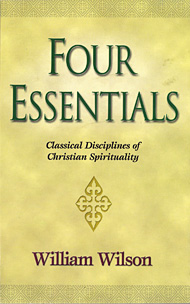
Suggested Donation:
$10 + $4 shipping
Sign up to receive Father William's Searching Deeper writings by email.
|
Lectio Divina, An Overview |
Receiving God in the Word: Theology and Practice of Lectio Divina
THEOLOGY
The Theological Basis of Biblical Contemplation and Union with God:
The “form” of the saving action of the God: Sending the Word. Our response: Receiving the Word. God the Father’s “Way” to us is the Word. The “Way” of the Children to the Father is the Word.
The Complementarity of Lectio Divina and the Jesus Prayer
The Jesus Prayer is also called “The Prayer of the Heart “, or “Breath Prayer”. The word of scripture is a sacrament of Jesus, God the Word. Union with Jesus, the Word of God, in Lectio, transforms the affections of our heart (the loving faculty) and the thoughts of our mind (the knowing faculty).
- Reading of Scripture seeking God
- Meditation on Scripture
- Prayer inspired by Scripture
- Contemplation inspired by Scripture
PREPARATIONS FOR THE PRACTICE OF
LECTIO DIVINA:
- Set a place and a time, daily if possible, for 15 to 30 minutes.
- Consciously desire union with God as you read Scripture.
- Bring to Scripture an attitude of reverence, humility, and submission.
- Begin with prayer for the grace to understand and carry out God’s Word.
1. Reading as Method
The simple act of reading Scripture unites the heart and mind to God. Union with God in the Word progressively transforms the way we think and the way we love in the image of Jesus Christ. The Word of God, working on us as we read the Holy Scriptures, purifies our heart, enlightens our mind, heals our wounds, and strengthens our will.
- Always read slowly.
- Pay attention to the meaning of the words.
- When you feel inclined, pause your reading to practice discursive meditation by comparing, analyzing, and questioning the text.
- Above all, apply the text to yourself.
- Read with an open “changeable” mind and a vulnerable heart.
- Identify with persons/events we meet in Scripture.
- Each person who responds to Jesus in the gospel represents one of our possibilities.
- We can be the sinful Peter denying with a curse that he knows the Lord and women caught in adultery whom Jesus saves.
- We can be the blind man Bartimaeus, the leper who heard the Lord’s words, “I do will it. Be made cleaned.”
- We can even be John who rests his head on the bosom of Jesus. See yourself in all the people in the Gospel.
- Memorize or write down your favorite verses of each day’s reading.
- Carry these texts and re-read them repeatedly during the day.
- Put them in your shirt pocket or your purse.
- Leave them on the passenger seat of your car.
- Tape that important Scripture text to the mirror in the bathroom or the refrigerator door.
2. Meditation as Method
Two kinds of “meditation” must be distinguished: Discursive and Contemplative.
Discursive meditation refers to the activity of thinking about connections and implications of the Scripture text. In discursive meditation of scripture we ruminate, compare, apply, analyze, question, and study the text. Discursive meditation is a very busy mental engagement with the text.
Contemplative meditation refers to the activity of repeating the same words of Scripture over and over. In this contemplative form of meditation one focuses exclusively on the words and meanings of the sacred text and avoids the distraction of thinking about connections or applications of the text. Whereas discursive meditation is an active conversation with the text, contemplative meditation is a simple, attentive, sustained, reception of the text. This is what is meant by “meditation as method” in lectio divina.
WHEN AND HOW TO MEDITATE A TEXT
God is light and healing for the soul. Each soul has its own particular darkness and wounds. God applies the light of revelation and the medicine of Scripture to each person according to his or her needs. In lectio divina we experience that action of the Holy Spirit as a felt attraction for a certain text. The divine visitation causes certain verses of the Scripture text to strike us powerfully as particularly beautiful, or comforting, or, inspiring, or illuminating. When this happens we should stop our Reading (or discursive meditation) and focus our attention upon the text that God has made special. We should read, memorize, and repeat by heart these words of Scripture. Repeat the same words over and over, just listening and enjoying their meaning. Repeat them slowly and attentively again and again. Close your eyes, if you like, and just repeat the words of God. Repeat them as long as you desire. As long as it is a spiritual pleasure or comfort…as long as the verse attracts you, repeat it over and over, slowly and deliberately. Stop when no longer sense the attraction, when you become board or the repetition seems monotonous. At that point, stop contemplative meditation and return to your reading.
Reports of the experience of Christians shows that God the Holy Spirit prescribes particular verses for meditation to meet the personal spiritual needs of the individual at the time. Meditation verses change with the needs and the times. For example, a person suffering from an unhealthy sense of shame and guilt was reading Paul’s letter to the Galatians. Suddenly, the words jumped off the page: “The life I live in the body, I live by faith in the Son of God who loved me and gave Himself for me. (Gal 2:20) For that person at that time this verse was healing and light. By repeating the same words over and over a sense of personal worthlessness was replaced by a delightful awareness of being precious to God and beloved even to the point of Christ dying for him.
3. Biblical Prayer as Method
In reading and meditation we are chiefly engaged in receiving the Word. Once received, the Word of God, like seed, causes us to bring forth fruit. The received Word evokes responses in the heart of joy, gratitude, wonder, praise, and love. The Word makes our minds fruitful with new insights, understanding and clarity, as well as causing difficulty in understanding, confusion, and uncertainty about the meaning of the Word for our lives. Our lectio divina becomes biblical prayer when we address all these responses of heart and mind to God.
Our biblical prayer will arise in our hearts spontaneously. It is not a planned activity. The Holy Spirit inspires it in our hearts in the moment. Bring with you to God as you practice lectio divina all of the concerns of your current experience of life. If you do, you will find yourself inspired by the words you read to talk to God. As illustration let us say someone has recently sinned or been sinned against. Now let this person happen to read the story of the woman caught in adultery. That person is all but forced to talk to God about his own sin or the sin of the person who offended him.
Another example: If you are very aware of suffering of a friend who is dying of cancer, and you read the story of the curing of the ten lepers or the raising of the son of the widow of Nain, you will not be able to remain silent. You will feel impelled to cry out to God in appeal for the healing of the beloved friend. If someone you love dies you will cry out to God, “Why! Why did You not heal my friend the way you healed these people!” Indeed, the words of Scripture themselves will bring to your mind the hopes, sorrows, joys, successes, failures, victories and the failures you experience in life.
All of these things you will bring to God in spontaneous prayer. You will lament, petition, intercede, complain, and give thanks. Sometimes your prayer will express the delight God gives you. Sometimes you will wrestle with God as with an enemy assailant when God allows the dark night of suffering to come upon you.
Express every good desire and every loving feeling in prayer. However, you must be open, honest, and transparent in your prayer. It is therefore necessary for you to express your negative responses to the scriptural word: your disappointment, confusion, disagreement, sadness, hurt and anger toward God. Do not fake or pretend good, pious, and reverent thoughts and feelings. If you have anger toward God, express it boldly to God. God wants your honest anger rather than your feigned reverence. If you are angry it is because you are hurt, and God most deeply cares about your hurt. Our negative responses, whether of intellect or heart, to God’s Word, will be healed if we bring to God in prayer. They will remain unresolved if we hide them from ourselves and from God.
Imitate the prayers of the saints you come upon in your lectio. Pray in the words, mood, and spirit that you find in persons who pray in scripture: The Patriarchs, Moses, the Judges, Prophets, Kings, and the persons you encounter in the life of Jesus. Pray the prayers of Paul. Above all, make your own the prayers of the Lord Jesus. Use these biblical examples as models for composing your own personal prayers.
4. Biblical Contemplation
In this context of lectio divina what we mean by contemplation can be summarized in the following definition:
Biblical contemplation is a personal experience of a powerful attraction of the attention of your mind and/or of the affection of your heart, to the love/being/presence of God now perceived in a special illumination of your consciousness or “felt” in a special enflaming of enflaming heart.
Here is an example from everyday life that provides an analogy by which we can understand what biblical contemplation is like. When a person, perhaps driving a car at dawn, first notices the striking beauty of the aurora, he or she spends a short instant in delightful, lovingly appreciative awareness, before any thoughts or words are formed. The person first sees the light and colors with the eyes and intuits the beautiful sunrise with the spirit. After that wordless and thoughtless intuition, he or she begins to “translate” the experience into conventional thoughts and words. So it is with the experience of contemplation during lectio divina.
Jesus promised to come and manifest Himself to us. Among the many ways He comes and shows Himself to us is the experience of contemplation in lectio divina. While you are engaged in lectio, the Lord comes at unexpected times and in ways previously unknown. St. Bernard of Clairvaux called this coming, a “Visitation”. Our Lord is present to everyone who engages in lectio divina. However, there is a particular religious experience that regularly happens to all sincere Christians that we refer to as a “Visitation by the Word, Jesus”.
This visitation by the Lord is given to all of God’s children who are living in grace, not just to a few elite saints. The gift of biblical contemplation may be recognized by the following signs. As you approach the Scriptures or as you are reading it, suddenly you are filled with a powerful impression of the presence of the Lord. You feel filled within and surrounded without by His Presence and His Love. A sense of warmth ceases the heart. The mind is filled with awareness of His Presence. Your heart intuits the loving Lord and you are filled with joy.
When the Visitation comes, pause in your reading. It is not time to read about the mysteries of God. It is time to gaze upon them with the eyes of the heart. The spiritual Sun has risen in your heart. You know the Lord. There is nothing else to do, now, but reciprocate by giving yourself in love to the One who is giving Himself to you in love. At this time of contemplation, you serve God best by simply enjoying God who is enjoying you. Your attention is being attracted by the goodness and beauty of the Love, God Himself, who is warming your heart and enlightening your mind with this gracious Presence.
This contemplation is not trance-like. You are not carried out of your senses. You do not loose the use of your faculties. You do not go unconscious in any “whiteout”. You do not see things with your physical eyes or hear things with your ears. You are simply fully engaged in an act of most keen and exclusive attention full of love to the divine Beloved Who is manifesting Himself to you.
Remain attentive to the Visitor as long as the visitation lasts. It might last a few minutes or much longer. It might not disappear all at once but recede slowly like an ocean tide. In that case you cannot pinpoint the exact moment when it began or ended. Sometimes it takes hours or days to wane.
Receive the visitation(s) with gratitude and joy. Live them to the full. But do not cling to them when they are over. Do not try to produce them when they are not present. Leave all the initiative to God. Your part is to respond in grateful, celebratory, loving attention. When He comes it is best for you that He come then. When He leaves it is best for you that He leave then. He alone knows when it is best for you that He should come and leave.
These visitations are among the greatest gifts of God to His Children. We should desire them and pray for them and receive them with joy. But we must be detached from them. The danger is that we may love this gift of God more than we love the Will of God. Therefore, we should give ourselves over entirely to the work of Christian living. At lectio divina, we should dedicate ourselves to Reading, Meditation, and Prayer. As for Contemplation, we will allow God to decide when and how to give it to us.
After a period of contemplation ends, we will return to our practice of lectio divina. Remember, the Gift we celebrate consciously in contemplation is fully ours always and everywhere. We are just as fully united to God in the substance of our spirit when we Read, Meditate, and Pray as we are united to Him in our consciousness when we Contemplate.
Reading, Meditation, and Prayer are methods
placed within our control by grace.
Contemplation is a Divine Visitation
that interrupts our method and control.
- William Wilson
Return to the Four Essentials
|